

Filter

Location
- Miami, USA
Job Type
- Road / Warehouse Based
Filter
Location
- New York, USA
Categories
- Notice
- Pinned
Friday 4th September 2026
The Hidden Engine: Why Regular Art Shuttles Matter to the Global Art Market
By Taylor Longenberger, Gander & White New York, and Samantha Mole, Gander & White London
Most works of art reach the public only after a great deal of careful work behind the scenes. Before anything is installed, sold, or delivered, there are checks to make, paperwork to prepare, and practical questions to settle about access, packing, and timing. In our work with galleries, auction houses, institutions, and private collectors, we know how much difference those details can make. Regular fine art shuttles are one way we help keep those moves manageable.
At Gander & White, our scheduled road services in the United States and Europe support clients who need a dependable way to move works between established art-market centres. For many clients, a shuttle offers a clearer, simpler option: regular departure windows, shared transport planning, and less need to arrange a dedicated vehicle for every shipment.
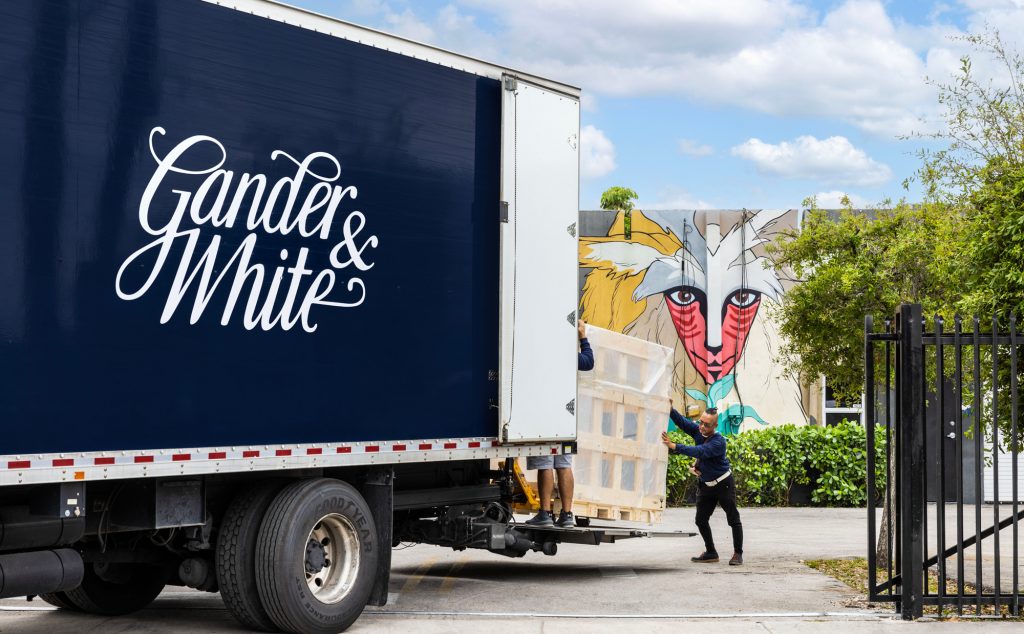
In the United States, our routes between New York, Florida, and California reflect common movement patterns in the market. We regularly collect works from galleries, auction houses, storage facilities, and private residences, then deliver them for exhibitions, consignments, installations, or seasonal relocations. Our bi-weekly New York-to-Florida service and twice a month New York-to-California route give clients set timings to work around, while allowing us to plan vehicle space and packing requirements in advance.
That consistency can make a real difference. Exhibition dates and auction deadlines rarely move easily, and no one wants transport to become the source of last-minute pressure. When collection and delivery dates are known, our clients can plan condition reports, insurance, site access and delivery slots around the route.
Demand usually follows the art calendar. Fairs, auctions, and exhibition openings can create concentrated periods of movement, with several clients needing works to travel at the same time. Our scheduled shuttles help us manage that volume by grouping compatible shipments and planning the route before the vehicle leaves.
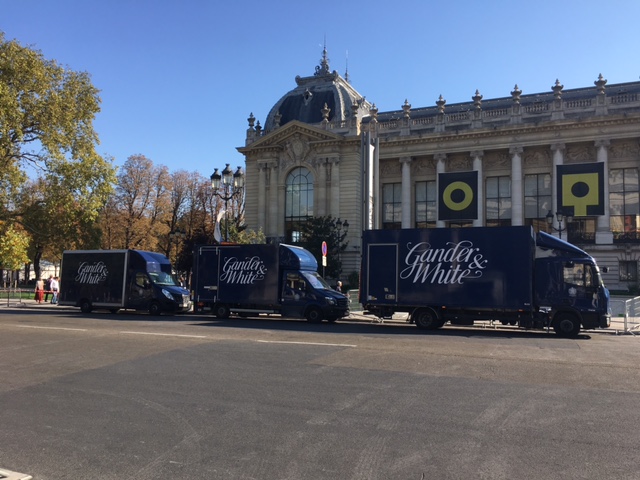
In Europe, the same principle applies, though cross-border administration adds another layer. Our Paris–Switzerland shuttle sits within a wider London–Paris–Switzerland network, giving galleries, auction houses, and private clients a regular option for moving works between these centres. We increased the service on the entire route from twice a month to weekly a few years ago to better reflect the needs of clients and Swiss partner agents. A weekly shuttle is particularly useful for repeat consignments and works travelling to or from storage, fairs, exhibitions, and viewings.
For our clients, the practical value is certainty. If a route is scheduled, they can confirm collection dates, brief registrars or installers, prepare the necessary paperwork and organise site access with more confidence. For our transport teams, the schedule gives us time to look closely at the work and make sure the right packing, equipment and vehicle capacity are in place.
At busier points in the calendar, volume can change the plan. We may need a larger vehicle, an additional crew or extra space on a route. The earlier we receive measurements and access details, the better we can build a sensible schedule without compromising handling standards.
Cross-border movements require particular attention to documentation. Depending on the shipment, we may need to coordinate customs paperwork, export licences or temporary admission documents. Since Brexit, UK-related movements have required more preparation. The operational detail matters because no two shipments are identical. Before loading, we need to understand the work’s size, condition, packing, and any handling restrictions.
Good communication is also part of our logistics. We need the right information at the right point: when paperwork will be ready, how access is arranged, and whether there are any site restrictions. Getting those details early helps everyone avoid delays at loading bays, storage sites, private residences and exhibition venues. Our regular shuttles are especially useful when plans change; a late consignment or revised installation date is easier to manage when there is already a route and a team familiar with the requirements.
We see this increasingly in a market where works may move several times in a short period: from a consignor to storage, from storage to a fair, from a fair to an exhibition, or from an auction house to a buyer. Each leg requires coordination, and each handover creates a point where accuracy matters. For us, a shuttle is a practical service built around fixed routes, planned departures, experienced handlers, and the documentation needed to move works safely and legally. In the United States, our services connect major domestic centres. In Europe, they help clients navigate a smaller but more administratively demanding market.
The result is not simply transport from one address to another. It is the planning that allows us to collect a work properly, record it accurately and deliver it when the client needs it. For clients, that makes the process easier to manage; for us, it is what makes a regular shuttle useful to the market.
Behind each completed move is a route, a schedule, and a team focused on getting the work there safely and without unnecessary stress.