Filter

Location
- Miami, USA
Job Type
- Road / Warehouse Based
Filter
Location
- New York, USA
Categories
- Notice
- Pinned
Tuesday 16th June 2026
The Choreography of New York Art Fair Week
by Francis Petit, Director of Gander & White New York
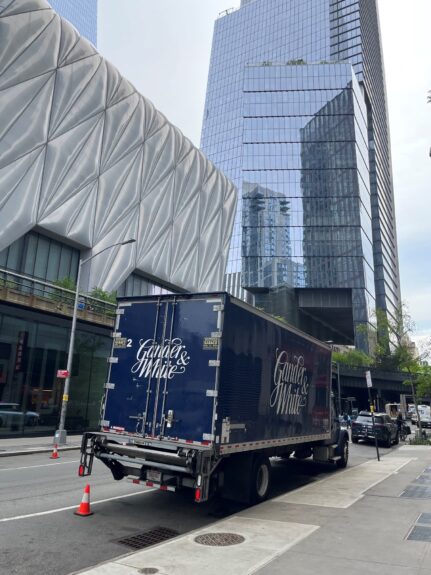
There is something uniquely energising about New York Art Fair week. When fairs like Frieze New York and TEFAF New York happen simultaneously, the city becomes a focal point for the international art world: collectors, galleries, couriers, organisers, installers, and specialists all moving at full speed. This year, that overlap was especially intense, with Frieze New York running at The Shed from 13–17 May and TEFAF New York at the Park Avenue Armory from 15–19 May. For those of us working behind the scenes, that convergence brings both excitement and extraordinary complexity. At Gander & White, it means managing two major art fairs filled with high-value art at the same time – and making sure neither operation compromises the other.
The challenge starts long before the art fair doors open. The visible part of Art Fair week may be the finished booth, perfectly lit and presented, but the unseen reality is a detailed choreography of truck loading, airport arrivals, warehouse releases, delivery windows, access restrictions, installation schedules, and last-minute changes. When two major art fairs overlap in New York, those moving parts multiply very quickly. This year, we responded by creating a dedicated two-team system, with separate operations teams focused on each fair. That structure is critical. It allows us to protect the flow of each project and ensures the overlap does not negatively affect the clients and galleries we are supporting at either venue.
New York itself adds another layer of pressure: traffic is unpredictable; loading access is limited; schedules are tight; staging space is scarce; and venues can feel extremely cramped during install periods. In that environment, scheduling is everything. We work hard to manage expectations as early as possible and to understand precisely what each client needs — whether that is a straightforward installation, a rehang, additional movement during the fair, or support after a sale. We also carefully manage other work during the busiest fair periods and block out significant warehouse space to give ourselves room to be flexible and reactive.
Whilst plans can change right up until the art fair opens, planning starts around three months ahead. Our famous flexibility is crucial to deal with ever-evolving requests, from changes to the artworks on display due to consignment delays through to a total redesign of the stand layout. Our office staff remain in close contact with both galleries and fair organisers, enabling our highly skilled fine art technicians to carry out their roles as smoothly as possible. Forward planning ensures that when install day arrives, we can work on site smoothly and calmly without being rushed.
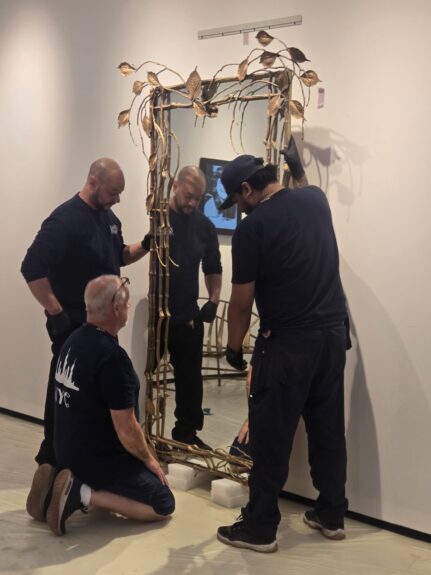
Some of the most technically challenging installs are not necessarily the largest works, but those carried out in difficult environments: tight corridors, restricted access points, crates stacked everywhere, and a clearly delineated booth space that still leaves little room for error. In these conditions, keeping works secure while maintaining flow becomes a major operational challenge. It requires calm judgement, spatial awareness, and absolute attention to detail. Fine art logistics often becomes invisible once the fair opens, but during install week it is an intense physical and organisational exercise.
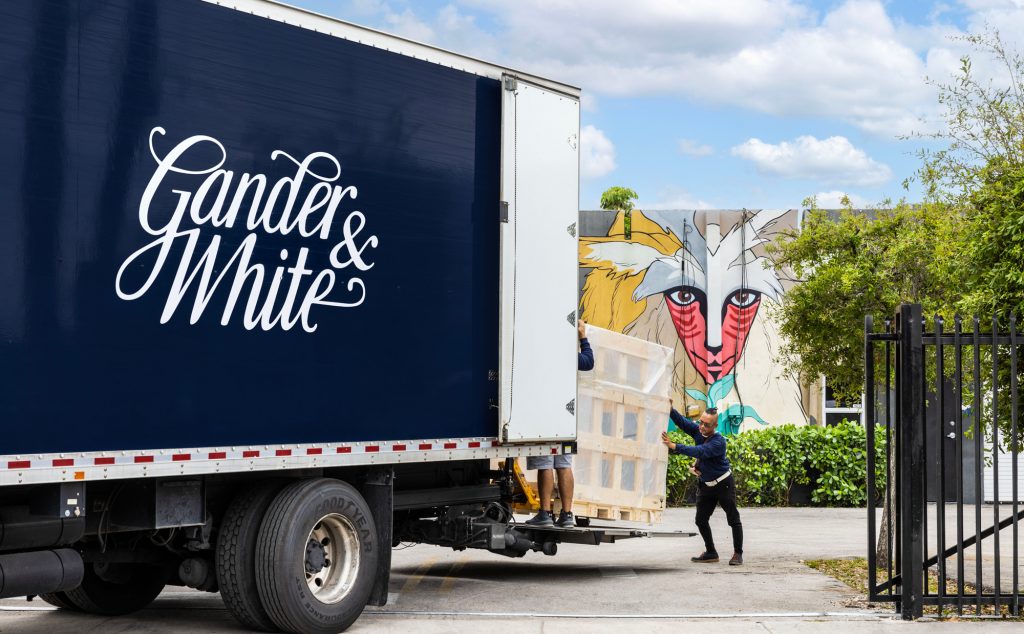
What often surprises people is just how much of that work happens outside public view, very early in the morning or late at night. A typical day might begin at 6am, while some team members do not finish until 1am. We need one crew preparing works, another delivering and installing them, and another handling empties alongside the constant movement of packing materials. It takes a huge amount of time and coordination to place each artwork exactly where it needs to be presented. When visitors walk into a fair and everything feels effortless, that is usually the sign that a great deal of effort has gone into making it appear so.
For me, what distinguishes Gander & White in these high-pressure moments is our commitment to personalised service, calm communication, and flexibility. We always aim to give clients a dedicated account manager who can support them for the duration of the fair — from pre-fair planning and installation to storage, post-fair movements, and the return of unsold works. In a week as compressed and demanding as New York Art Fair week, that continuity matters. The complexity is real, but so is the excitement. There is a particular satisfaction in seeing two major art fairs open successfully, knowing how much work, resilience and coordination it took behind the scenes. That is the challenge of New York Art Fair week, and also the reason so many of us love it.