

Filter

Location
- Miami, USA
- Palm Beach, USA
Job Type
- Road / Warehouse Based
Filter
Location
- New York, USA
Categories
- Notice
- Pinned
Thursday 28th May 2026
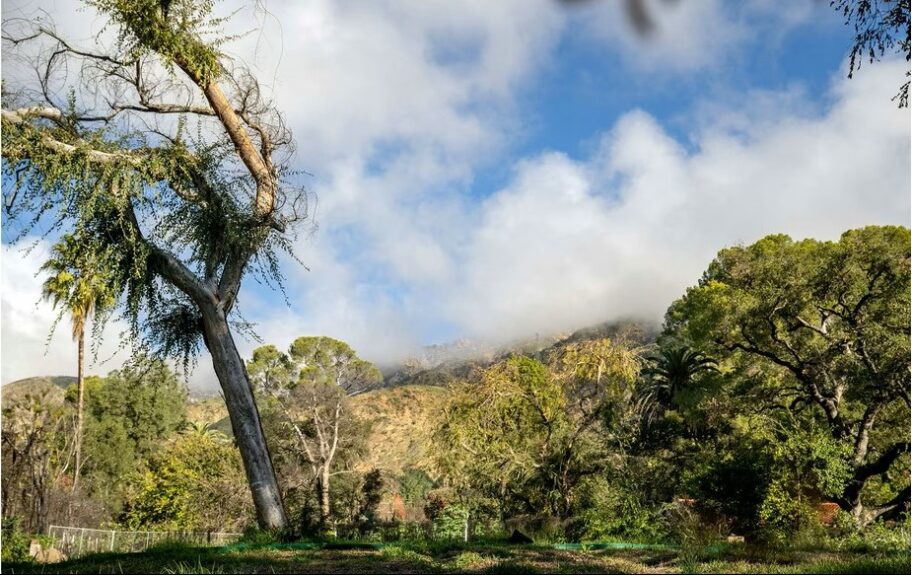
Risen from the Ashes: Rebuilding the Art Community in Los Angeles
By George Lacovara, Director of Gander & White, West Coast
As the Palisades and Eaton fires accelerated under the unforgiving Santa Ana winds, our phones were flooded with clients eager to protect and safeguard their priceless collections. At Gander & White, all hands were on deck, working tirelessly around the clock as we sprang into action. The entire community came together to support those affected, including artists, galleries, museums, collectors, auction houses, and art logistics companies.
A year on from the devastating Los Angeles fires of January 2025, the narrative is not one of collapse, but of recalibration. From my perspective, working closely with collectors, galleries, and institutions on the ground, what stands out most is how quickly the arts community in L.A. has regained its footing.
A Tale of Two Art Fairs
Nowhere was this more evident than in the comparison between Frieze Los Angeles 2025 and 2026. In the immediate aftermath of the fires, the 2025 fair’s tone was understandably subdued, its logistics complex, and its context emotionally charged. There were real questions about whether the fair should proceed at all. And yet, one year later, the picture looks markedly different.
Frieze L.A. 2026 felt, in many respects, like a return to form. Attendance was strong, transactions were steady, and crucially, the ecosystem around the fair appeared intact. From a logistics standpoint, the “snap back” was strking. We handled a total of 21 galleries, a good share of those exhibiting. What is notable is not just the number, but the consistency: these are longstanding clients who continued to commit to Los Angeles, even in the face of uncertainty. Most of our clients performed well commercially across both fairs. That continuity speaks volumes. It sugguests that, while the fires disrupted operations, they did not fundamentally alter confidence in L.A. as a market.
Cultural Resilience
In the months following the fires, there was widespread speculation about a potential exodus of collectors, capital, and cultural activity. That scenario, at least at scale, did not materialize. There has been loss, certainly, but there has been no mass flight. High-value works were destroyed, along with homes, artist studios, and private collections. Some have chosen to leave, and others are still in the process of rebuilding. The gravitational pull of L.A.’s creative industries, collector base, and institutional infrastructure remains strong.
One open question is the role of the insurance market. How it has adapted and how it will continue to respond to increased environmental risk is something the industry is still working through.
Renewed Momentum
With the 2028 Olympic Games on the horizon, many are investing in infrastructure, culture, and international engagement. Alongside this, L.A. continues to expand its cultural footprint through new museum programming and cross-industry collaborations that reflect the city’s unique position at the intersection of art, entertainment, and technology. These developments are not just symbolic; they are actively reinforcing L.A. as a global cultural hub at a moment when confidence matters most.
Despite the devastating fires, the city has doubled down on its cultural infrastructure by investing into expansions of museums like the Los Angeles County Museum of Art, The Broad, and the California Science Center. The Lucas Museum of Narrative Art continues to build excitement with its scheduled opening this fall. The Armenian American Museum and Cultural Center of California remains under construction and is expected to be completed ahead of the Olympic Games. Even longstanding institutions such as the Natural History Museum of Los Angeles County are evolving their programming and physical spaces to attract new audiences.
What is striking is the timing. These expansions are not occurring in spite of recent disruption, but in parallel with recovery. They serve as a tangible signal of confidence that both public and private stakeholders are investing in LA as a place of cultural significance.
The Bigger Challenges Facing L.A.
It would be a mistake to view the fires as the singular defining challenge for arts and culture in L.A. In many respects, they are a part of a broader and more complex set of pressures.
The slowdown in the entertainment industry, for example, has had a tangible impact on liquidity and confidence. The increasing use of A.I. has reshaped the creative economy in ways we still trying to grapple with. And the cost of living in L.A. continues to put pressure on artists, writers, entertainers, and the wider cultural workforce. From my perspective, these forces may ultimately prove more consequential than the fires.
The Climate Reality
What the fires have done, unequivocally, is bring climate risk into sharper focus. This is no longer a peripheral concern; it’s a central operational reality. For those of us in fine art logistics, this has translated into a renewed emphasis on resilience: diversified storage, safety strategies, enhanced climate controls, and more sophisticated contingency planning. Clients are asking not just how to move art, but how to protect it over the long term in an increasingly unpredictable environment.
The key shift is psychological as much as practical. The question is no longer if events like this will happen again, but rather when.
A Market That Endures
Los Angeles has always been defined by its ability to absorb shock and reinvent itself. The past year has reinforced that identity with the art world. What we are seeing is not a market that has simply “recovered,” but one that has demonstrated its durability through relationships and community.
For Gander & White, this moment has underscored the importance of continuity by being a stable partner. Our role as custodians of the irreplaceable is not just to move and protect artworks, but to support the ecosystems that sustain them. A year on, the L.A. art world is not unchanged. But it is united, active, and perhaps most importantly, forward-looking.